
Hello Friends nowadays, competition is everywhere. Every business wants to grow faster than its competitors and attract more customers. Whether you run a startup, a small business, or a large enterprise, growth becomes difficult when your target audience doesn’t know about your products or services. This is why advertising has become one of the most important investments for modern businesses.
While there are many advertising platforms available today, LinkedIn continues to be one of the most effective channels for B2B marketing. Unlike other social media platforms that focus on entertainment, LinkedIn is designed for professionals, decision-makers, entrepreneurs, and industry leaders.
If your goal is to generate qualified leads, build brand awareness, or connect with business buyers, LinkedIn advertising can help you reach the right audience at the right time.
In this guide, we’ll explore how LinkedIn advertising works and discuss 11 proven strategies that can help you generate high-quality B2B leads in 2026.
Why LinkedIn Advertising Matters in 2026
LinkedIn has become one of the most powerful platforms for B2B advertising. As businesses continue to embrace digital marketing, the ability to target professionals based on their job title, industry, company size, skills, and seniority level has made LinkedIn an essential tool for lead generation.
Unlike traditional advertising channels, LinkedIn allows marketers to reach people who are actively involved in business decisions. This means your advertising budget is spent on reaching potential customers who are more likely to be interested in your products or services.
For companies selling software, consulting services, SaaS products, professional services, or enterprise solutions, LinkedIn often delivers higher-quality leads compared to many other advertising platforms.
What Is LinkedIn Advertising?
LinkedIn Advertising is LinkedIn’s paid marketing platform that allows businesses to promote their content, products, and services to a targeted professional audience.
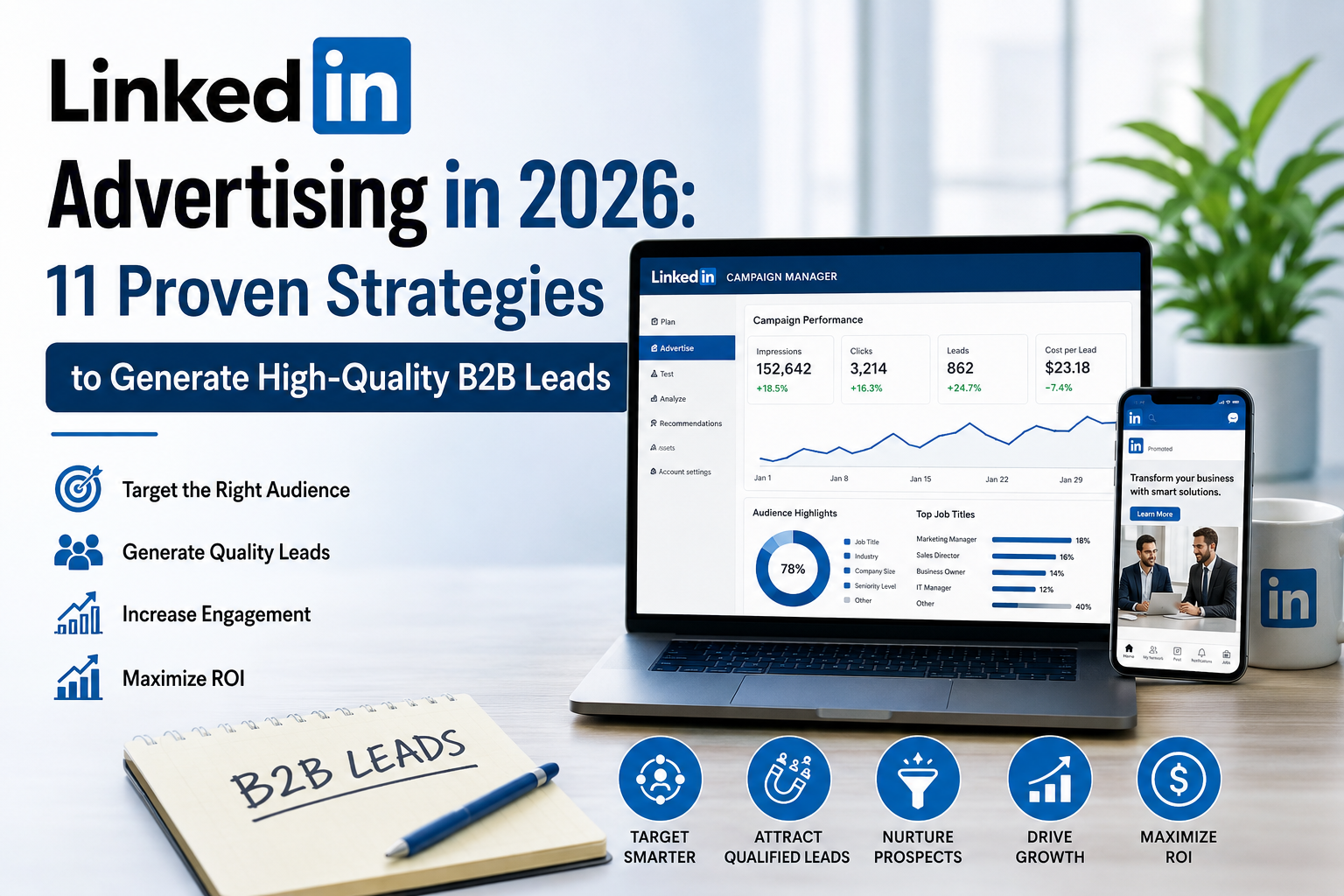
Through LinkedIn Campaign Manager, advertisers can create campaigns designed to increase brand awareness, drive website traffic, generate leads, promote events, or encourage conversions.
The platform offers multiple ad formats and advanced audience targeting options, making it particularly effective for B2B marketing campaigns.
How LinkedIn Ads Work
LinkedIn Ads operate through LinkedIn Campaign Manager. Businesses first choose a campaign objective, such as lead generation, website visits, engagement, or conversions. Next, advertisers define their audience based on professional demographics such as:
- Job Title
- Industry
- Company Size
- Skills
- Seniority Level
- Location
Once the audience is selected, businesses set their budget, create ad creatives, and launch their campaigns. LinkedIn then displays the ads to relevant users and provides detailed analytics to help advertisers measure performance and optimize results.
LinkedIn Ad Formats Explained
Choosing the right ad format is crucial for campaign success.
| Ad Format | Best For |
|---|---|
| Single Image Ads | Brand awareness and traffic |
| Video Ads | Engagement and storytelling |
| Carousel Ads | Product showcases |
| Document Ads | E-books and reports |
| Lead Gen Forms | Lead generation |
| Message Ads | Personalized outreach |
| Conversation Ads | Interactive engagement |
Each format serves a different purpose, so selecting the right one depends on your campaign goals and target audience.
11 Proven LinkedIn Advertising Strategies for 2026
1. Define Clear Campaign Goals
Many businesses launch advertising campaigns without clear objectives. Before spending any budget, identify what success looks like.
Ask yourself:
- Do you want more website traffic?
- Are you focused on generating leads?
- Do you want to increase brand awareness?
- Are you promoting an event or webinar?
Having a clear objective helps you choose the right campaign type and measure performance accurately.
2. Create Detailed Buyer Personas
The more you understand your audience, the better your campaigns will perform.
A buyer persona should include:
- Industry
- Job role
- Company size
- Challenges
- Goals
- Purchasing authority
Understanding these factors allows you to create ads that address real business problems and attract qualified prospects.
3. Target Decision-Makers Instead of Broad Audiences
One of LinkedIn’s greatest strengths is professional targeting.
Rather than targeting everyone in an industry, focus on people who influence purchasing decisions, such as:
- CEOs
- Founders
- Directors
- Marketing Managers
- HR Managers
- IT Leaders
Smaller, highly targeted audiences often produce better results than broad campaigns.
4. Use LinkedIn Lead Gen Forms
Lead Gen Forms remain one of the highest-converting features on LinkedIn. These forms automatically populate user information from LinkedIn profiles, reducing friction during the signup process.
Benefits include:
- Higher conversion rates
- Better user experience
- More accurate lead data
- Faster lead collection
For businesses focused on lead generation, this feature should be a key part of every campaign strategy.
5. Invest in High-Quality Visual Content
The first thing people notice in a LinkedIn ad is the visual. If your image or video fails to grab attention, users are likely to scroll past it without reading the message.
Use professional graphics, clear branding, and concise messaging. Videos demonstrating product benefits, customer success stories, or industry insights often perform well on LinkedIn.
Some visual content ideas include:
- Industry reports
- Product demonstrations
- Customer testimonials
- Webinar promotions
- Infographics
- Case study highlights
Remember, your visual should support your message rather than distract from it.
6. Offer Valuable Content Instead of Direct Sales Pitches
Many advertisers make the mistake of immediately promoting their product or service. Modern buyers prefer learning before making purchasing decisions.
Instead of pushing a sales message, offer something valuable such as:
- E-books
- Whitepapers
- Industry reports
- Research studies
- Webinars
- Free templates
- Checklists
Providing useful content helps build trust and positions your company as an authority in your industry.
7. Retarget Website Visitors
Not every visitor converts during their first interaction with your business. In fact, most potential customers need multiple touchpoints before taking action.
LinkedIn’s retargeting capabilities allow you to reconnect with:
- Website visitors
- Previous leads
- Video viewers
- Event attendees
- Existing prospects
Retargeting campaigns generally produce better conversion rates because the audience is already familiar with your brand.
8. Test Multiple Ad Variations
Successful LinkedIn advertisers rarely rely on a single ad.
Instead, they continuously test:
- Headlines
- Ad copy
- Images
- Videos
- Calls-to-action
- Audience segments
Even small changes can significantly impact performance.
For example:
| Element | Version A | Version B |
|---|---|---|
| Headline | Generate More Leads | Generate Qualified B2B Leads |
| CTA | Learn More | Download Free Guide |
| Image | Product Screenshot | Team Collaboration Image |
Running A/B tests helps identify what resonates best with your audience.
9. Optimize Landing Pages for Conversions
Your LinkedIn ad is only the first step. The landing page ultimately determines whether a visitor becomes a lead.
A high-converting landing page should include:
- Clear headline
- Strong value proposition
- Relevant content
- Social proof
- Customer testimonials
- Simple lead form
- Clear call-to-action
Many businesses lose potential leads because their landing pages fail to match the ad message.
Consistency between your ad and landing page improves both user experience and conversion rates.
10. Focus on Lead Quality Instead of Lead Quantity
Generating hundreds of leads means little if those leads never become customers.
Instead of measuring success solely by the number of leads generated, track:
- Qualified leads
- Sales opportunities
- Demo requests
- Conversion rates
- Customer acquisition cost
A campaign that generates 20 highly qualified leads is often more valuable than one that generates 200 unqualified contacts.
11. Continuously Monitor and Optimize Campaigns
LinkedIn advertising is not a “set it and forget it” strategy.
Top-performing advertisers regularly review:
- Audience performance
- Ad engagement
- Click-through rates
- Conversion rates
- Cost per lead
By analyzing campaign data and making ongoing improvements, businesses can maximize their advertising budget and achieve better long-term results.
Best LinkedIn Audience Targeting Options
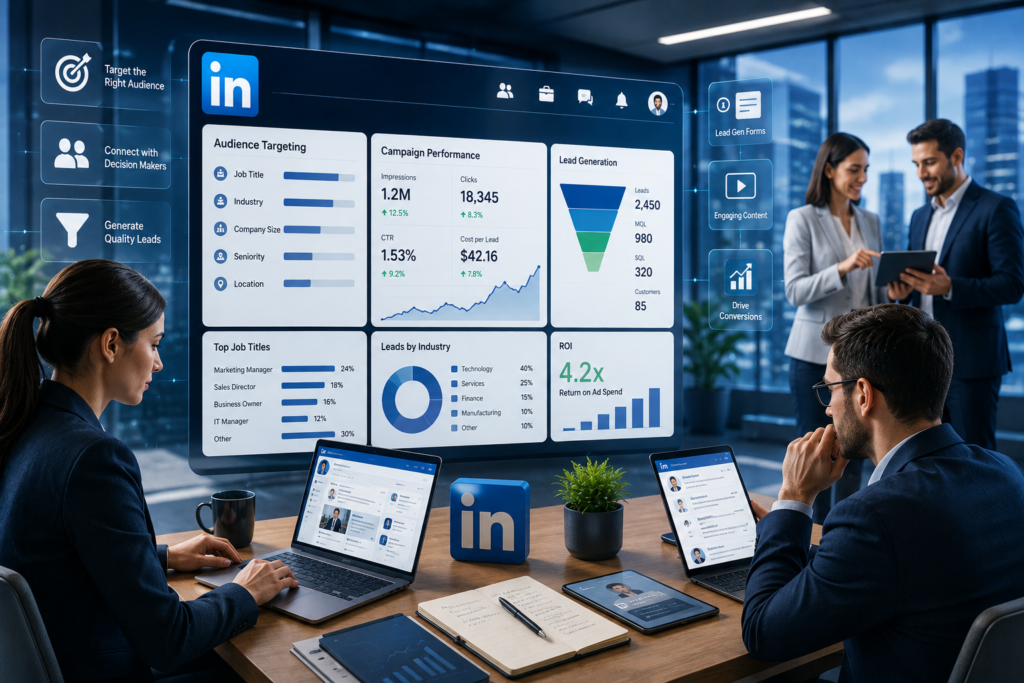
One of LinkedIn’s biggest advantages is its advanced targeting capabilities.
| Targeting Option | Description | Examples |
|---|---|---|
| Industry Targeting | Reach professionals working in specific industries relevant to your business. | Technology, Healthcare, Manufacturing, Finance, Education |
| Job Title Targeting | Target users based on their role and responsibilities within an organization. | CEO, Founder, HR Manager, Marketing Director, IT Manager |
| Company Size Targeting | Customize campaigns according to the size of the organizations you want to reach. | Small Businesses, Mid-Sized Companies, Enterprises |
| Seniority Targeting | Focus on professionals based on their level of authority and decision-making power. | Entry Level, Manager, Director, VP, C-Level Executives |
| Skills-Based Targeting | Reach professionals based on specific skills listed on their LinkedIn profiles. | Digital Marketing, Project Management, Data Analytics, HR Management, Software Development |
| Matched Audiences | Target existing customers, website visitors, or uploaded contact lists. | Website Visitors, Email Lists, Existing Leads, Event Attendees |
Matched Audiences
Upload customer lists or retarget website visitors to create highly personalized campaigns.
How Much Does LinkedIn Advertising Cost in 2026?
LinkedIn advertising is generally more expensive than many other social media platforms. However, it often delivers better lead quality.
Factors That Influence Costs
- Industry competition
- Target audience size
- Campaign objective
- Bid strategy
- Geographic location
LinkedIn Advertising Cost Breakdown
| Metric | Average Range |
|---|---|
| Cost Per Click (CPC) | $5 – $15+ |
| Cost Per 1,000 Impressions (CPM) | $20 – $80+ |
| Cost Per Lead (CPL) | $30 – $200+ |
| Daily Budget | $20+ |
Although costs may seem high, many businesses find LinkedIn worthwhile because of the quality of leads generated.
Common LinkedIn Advertising Mistakes to Avoid
Even experienced marketers make mistakes that reduce campaign performance.
| Mistake | Why It’s a Problem | Solution |
|---|---|---|
| Targeting Too Broadly | Broad targeting often results in wasted ad spend and low-quality leads. | Focus on specific job titles, industries, company sizes, and decision-makers. |
| Ignoring Audience Segmentation | Different audiences require different messaging and offers. | Create separate campaigns for different audience segments. |
| Using Weak Creatives | Low-quality visuals and generic ad copy can significantly reduce engagement. | Use professional images, videos, and compelling ad copy. |
| Sending Traffic to Generic Pages | Generic landing pages often lead to poor conversion rates. | Create dedicated landing pages that match your ad message and offer. |
| Failing to Measure Results | Without proper tracking, it becomes difficult to understand what is working and what needs improvement. | Track key metrics such as CTR, CPL, conversions, and lead quality. |
Key Metrics to Measure LinkedIn Advertising Success
To evaluate campaign performance, monitor the following metrics:
| Metric | Why It Matters |
|---|---|
| CTR | Measures ad engagement |
| CPC | Tracks advertising efficiency |
| CPL | Measures lead acquisition cost |
| Conversion Rate | Shows campaign effectiveness |
| ROAS | Measures return on investment |
| Lead Quality | Indicates business value |
These metrics provide valuable insights into campaign performance and help guide optimization efforts.
LinkedIn Advertising Best Practices for 2026
To maximize your results, follow these best practices:
- Define clear campaign goals.
- Focus on decision-makers.
- Use Lead Gen Forms.
- Test multiple creatives.
- Offer valuable content.
- Retarget interested users.
- Optimize landing pages.
- Track lead quality.
- Continuously analyze performance.
- Scale successful campaigns gradually.
LinkedIn Advertising Checklist
Before launching your next campaign, make sure you have completed the following:
✔ Defined campaign objectives
✔ Identified your target audience
✔ Created compelling ad creatives
✔ Selected the appropriate ad format
✔ Built a dedicated landing page
✔ Enabled conversion tracking
✔ Set up retargeting audiences
✔ Tested multiple ad variations
✔ Monitored lead quality
✔ Planned ongoing optimization
LinkedIn continues to be one of the strongest platforms for B2B advertising in 2026. Businesses that combine precise targeting, valuable content, and continuous optimization are far more likely to generate qualified leads and achieve sustainable growth. Whether you’re just getting started or looking to improve existing campaigns, implementing these 11 proven strategies can help you maximize your LinkedIn advertising results and build a stronger pipeline of high-quality B2B leads.