
Introduction
The number of health problems caused by modern work life has increased significantly in recent years. While technology has made work faster and more efficient, it has also created new challenges for our physical and mental health. Today, many professionals spend long hours sitting at desks, attending virtual meetings, and managing constant notifications.
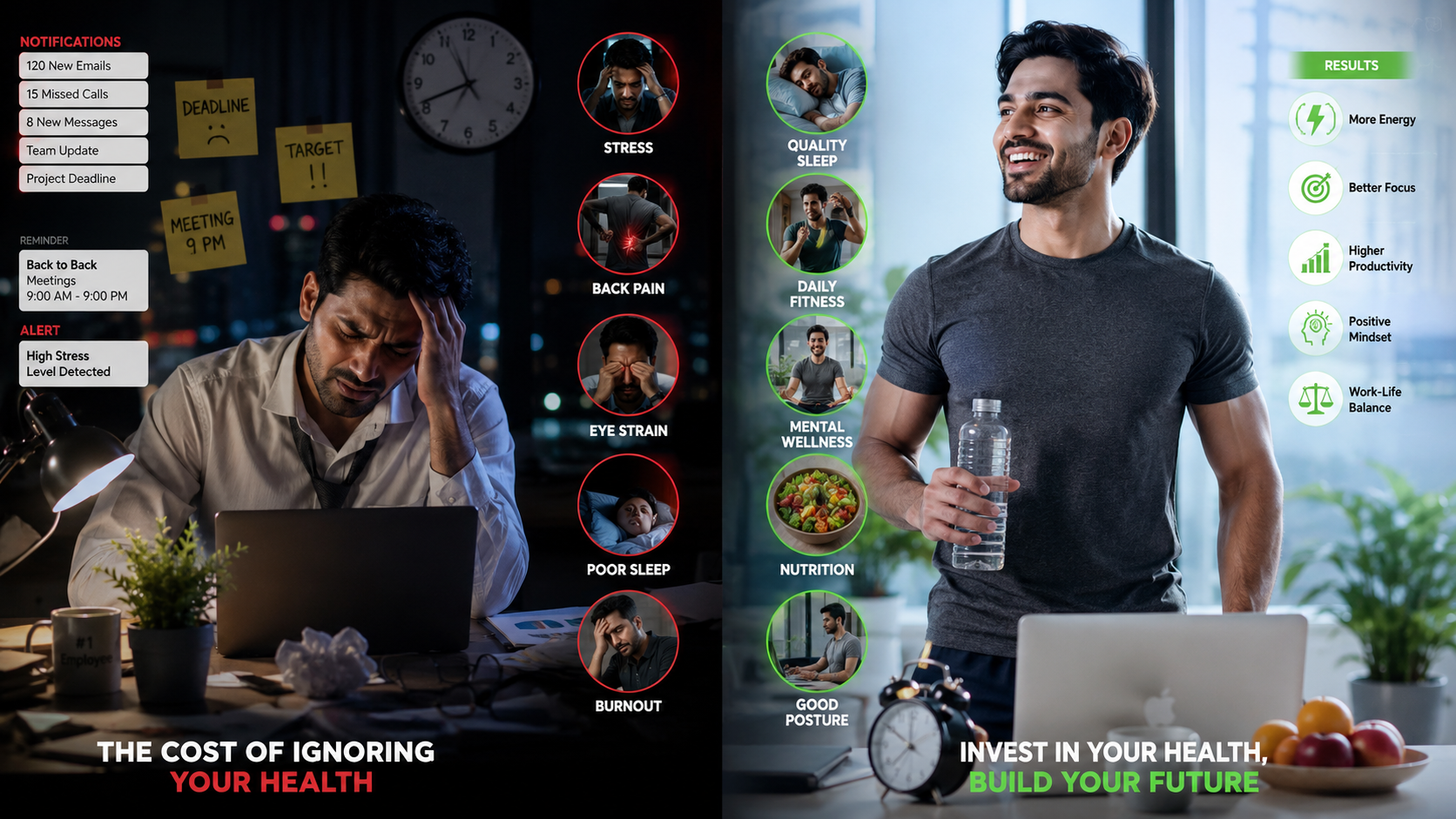
As a result, unhealthy work habits have become common. Many people experience stress, poor sleep, weight gain, back pain, and burnout. Furthermore, remote work and digital connectivity have blurred the boundaries between personal and professional life.
Fortunately, most health problems caused by modern work life can be prevented. By understanding these issues and taking the right steps, you can improve your health while maintaining productivity.
Why Modern Work Life Is Affecting Health
Modern work environments often encourage inactivity and prolonged screen exposure. In addition, busy schedules leave little time for exercise, relaxation, and healthy eating.
Consequently, professionals are facing more lifestyle-related health issues than ever before. Therefore, understanding the risks is essential for long-term well-being.
1. Chronic Stress
The Problem
Stress is one of the most common health problems caused by modern work life. Tight deadlines, increasing workloads, and workplace pressure can create constant mental strain.
Symptoms
- Headaches
- Fatigue
- Irritability
- Difficulty concentrating
- Anxiety
How to Fix It
First, identify the main causes of stress. Next, prioritize tasks and focus on one activity at a time.
Additionally:
- Practice deep breathing exercises
- Take short breaks during work
- Spend time outdoors
- Limit unnecessary multitasking
As a result, your stress levels can gradually decrease.
2. Poor Sleep Quality
The Problem
Many professionals sacrifice sleep to meet deadlines or spend extra time on digital devices. However, poor sleep affects nearly every aspect of health.
Symptoms
- Daytime tiredness
- Brain fog
- Reduced productivity
- Mood swings
How to Fix It
To improve sleep quality:
- Maintain a consistent bedtime
- Avoid screens before sleeping
- Reduce caffeine intake in the evening
- Keep your bedroom dark and quiet
Most importantly, aim for seven to nine hours of sleep every night.
3. Weight Gain and Obesity
The Problem
A sedentary lifestyle combined with unhealthy eating habits often leads to weight gain.
For example, many office workers spend eight to ten hours sitting each day. Meanwhile, fast food and sugary drinks have become part of daily routines.
Symptoms
- Increased body weight
- Low energy levels
- Reduced fitness
- Shortness of breath
How to Fix It
Instead of making drastic changes, start with small improvements.
- Walk for at least 30 minutes daily
- Eat more fruits and vegetables
- Drink plenty of water
- Reduce processed foods
Over time, these habits can produce significant results.
4. Back Pain and Neck Pain
The Problem
Poor posture is another major issue in modern workplaces. Moreover, sitting for long periods places extra pressure on the spine.
Symptoms
- Lower back pain
- Neck stiffness
- Shoulder tension
- Poor posture
How to Fix It
To reduce discomfort:
- Use an ergonomic chair
- Keep your monitor at eye level
- Stretch every hour
- Sit with proper posture
Furthermore, regular exercise can strengthen muscles and improve flexibility.
5. Digital Eye Strain
The Problem
Continuous screen exposure can lead to eye fatigue and discomfort.
Symptoms
- Dry eyes
- Blurred vision
- Headaches
- Eye irritation
How to Fix It
Follow the 20-20-20 rule.
Every 20 minutes:
- Look 20 feet away
- For 20 seconds
In addition, adjust screen brightness and ensure proper lighting in your workspace.
6. Burnout
The Problem
Burnout develops when prolonged stress becomes overwhelming. As a result, motivation and productivity often decline.
Symptoms
- Emotional exhaustion
- Lack of enthusiasm
- Feeling disconnected from work
- Reduced performance
How to Fix It
To prevent burnout:
- Take regular vacations
- Set work boundaries
- Schedule personal time
- Prioritize self-care
Ultimately, recovery requires both rest and balance.
7. High Blood Pressure
The Problem
Stress, poor nutrition, and lack of physical activity can contribute to high blood pressure.
Unfortunately, this condition often develops without noticeable symptoms.
How to Fix It
To maintain healthy blood pressure:
- Exercise regularly
- Limit salt intake
- Maintain a healthy weight
- Manage stress effectively
Additionally, regular health checkups can help detect issues early.
8. Anxiety and Mental Fatigue
The Problem
Constant connectivity makes it difficult to disconnect from work. Consequently, many professionals experience anxiety and emotional exhaustion.
Symptoms
- Overthinking
- Restlessness
- Irritability
- Difficulty relaxing
How to Fix It
You can support mental health by:
- Practicing mindfulness
- Limiting social media use
- Spending time with loved ones
- Seeking professional support when necessary
As a result, emotional resilience often improves.
9. Weak Immunity
The Problem
Poor sleep, stress, and unhealthy eating habits can weaken the immune system.
Therefore, the body becomes more vulnerable to illness.
How to Fix It
Strengthen your immunity by:
- Sleeping adequately
- Staying hydrated
- Eating nutritious foods
- Exercising consistently
Likewise, stress management plays an important role in immune health.
10. Physical Inactivity
The Problem
Physical inactivity remains one of the biggest health problems caused by modern work life. Many professionals spend most of their day sitting.
How to Fix It
Fortunately, simple changes can help:
- Stand every hour
- Walk during phone calls
- Use stairs whenever possible
- Follow a regular exercise routine
Even small increases in daily movement can improve overall health.
A Simple Daily Health Routine for Working Professionals
Morning
- Drink water after waking up
- Stretch for 10 minutes
- Eat a healthy breakfast
During Work
- Take movement breaks every hour
- Maintain good posture
- Stay hydrated
Evening
- Go for a walk
- Limit screen time
- Prepare for quality sleep
By following these habits consistently, you can reduce many lifestyle-related health risks.
Conclusion
The rise in health problems caused by modern work life is a serious concern in 2026. However, these issues are not unavoidable. By improving sleep, staying active, managing stress, and maintaining healthy routines, professionals can protect their physical and mental well-being.
Most importantly, remember that success is easier to achieve when your health is strong. Therefore, investing in healthy habits today can lead to a happier and more productive future.
Frequently Asked Questions (FAQs)
What are the most common health problems caused by modern work life?
The most common issues include stress, poor sleep, obesity, back pain, burnout, anxiety, and physical inactivity.
How can I stay healthy while working long hours?
You can stay healthy by exercising regularly, taking breaks, eating nutritious foods, staying hydrated, and getting enough sleep.
Why does sitting all day affect health?
Prolonged sitting can increase the risk of obesity, poor circulation, back pain, and other lifestyle-related health conditions.
Can workplace stress affect physical health?
Yes. Chronic stress can contribute to headaches, high blood pressure, sleep problems, and weakened immunity.
What is the best way to prevent burnout?
Setting work boundaries, taking regular breaks, prioritizing sleep, and maintaining work-life balance are effective ways to prevent burnout.
How much exercise should working professionals get?
Most experts recommend at least 150 minutes of moderate physical activity per week.